The Tenaska Center for Arts Engagement expands on Omaha Performing Art’s vision for the Dick & Mary Holland Campus, creating space for arts education programs to flourish.
Beginning with the Holland Center, it has been our great pleasure to work together with O-pa to create a campus that expresses the richness and breadth of their mission and share it with an even wider audience.
Stephen P-D Chu, AIA, Partner at Ennead Architects.
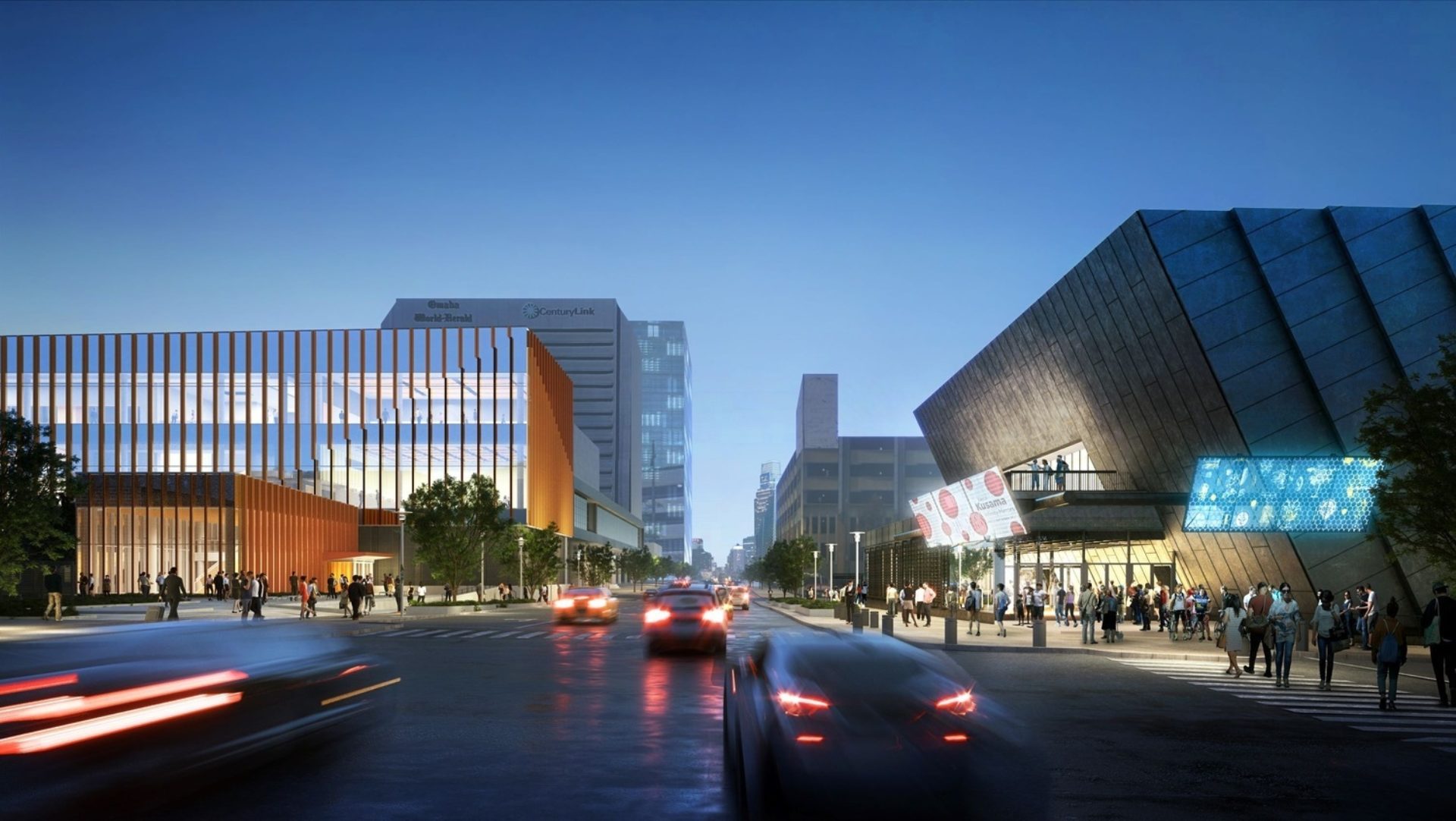
Centrally located in downtown Omaha, the Tenaska Center is on the east side of the Holland Center, across the street from Steelhouse Omaha. It provides additional rehearsal, workshop, and classroom space to accommodate O-pa’s expanding education and community engagement programs.
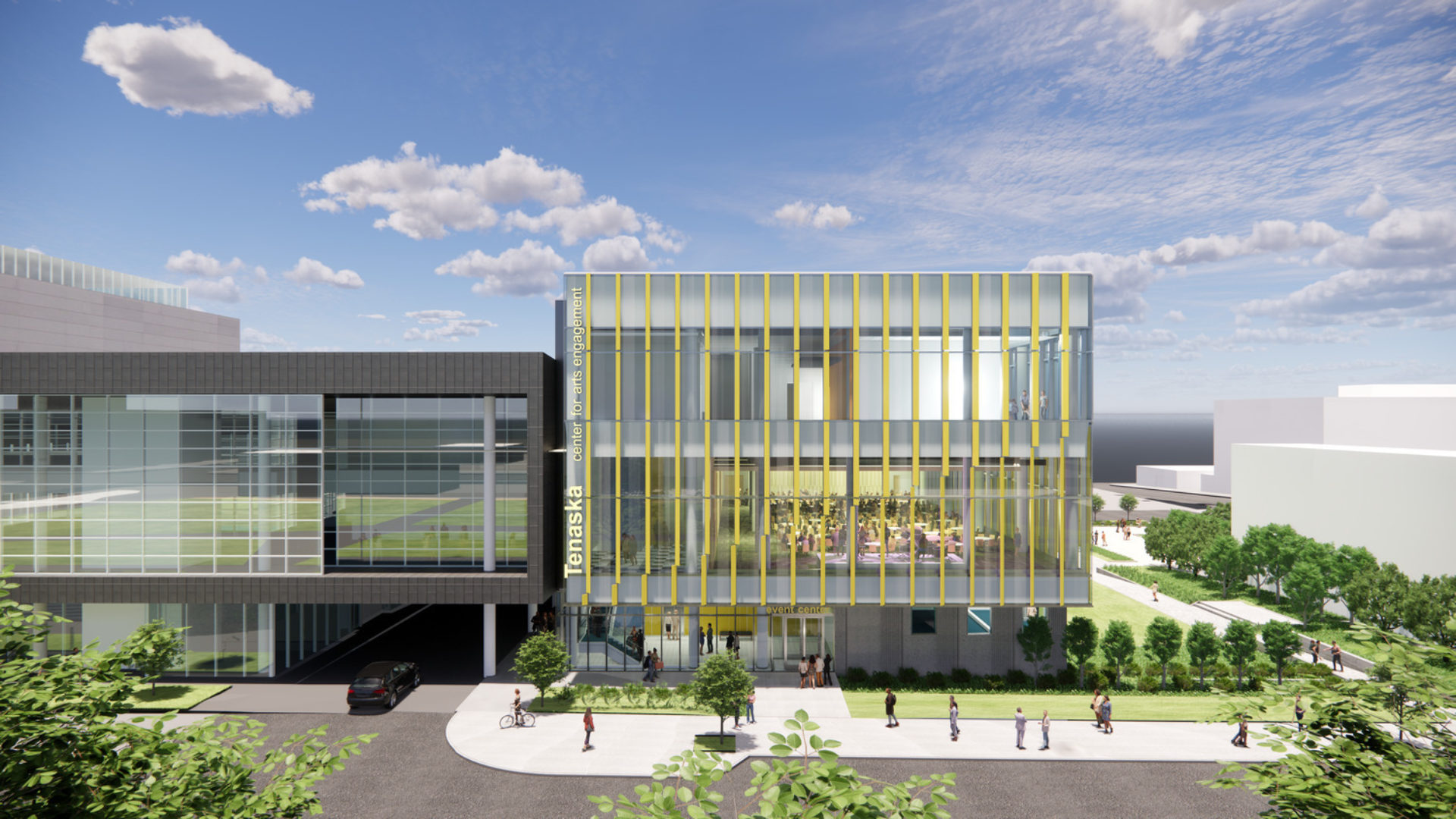
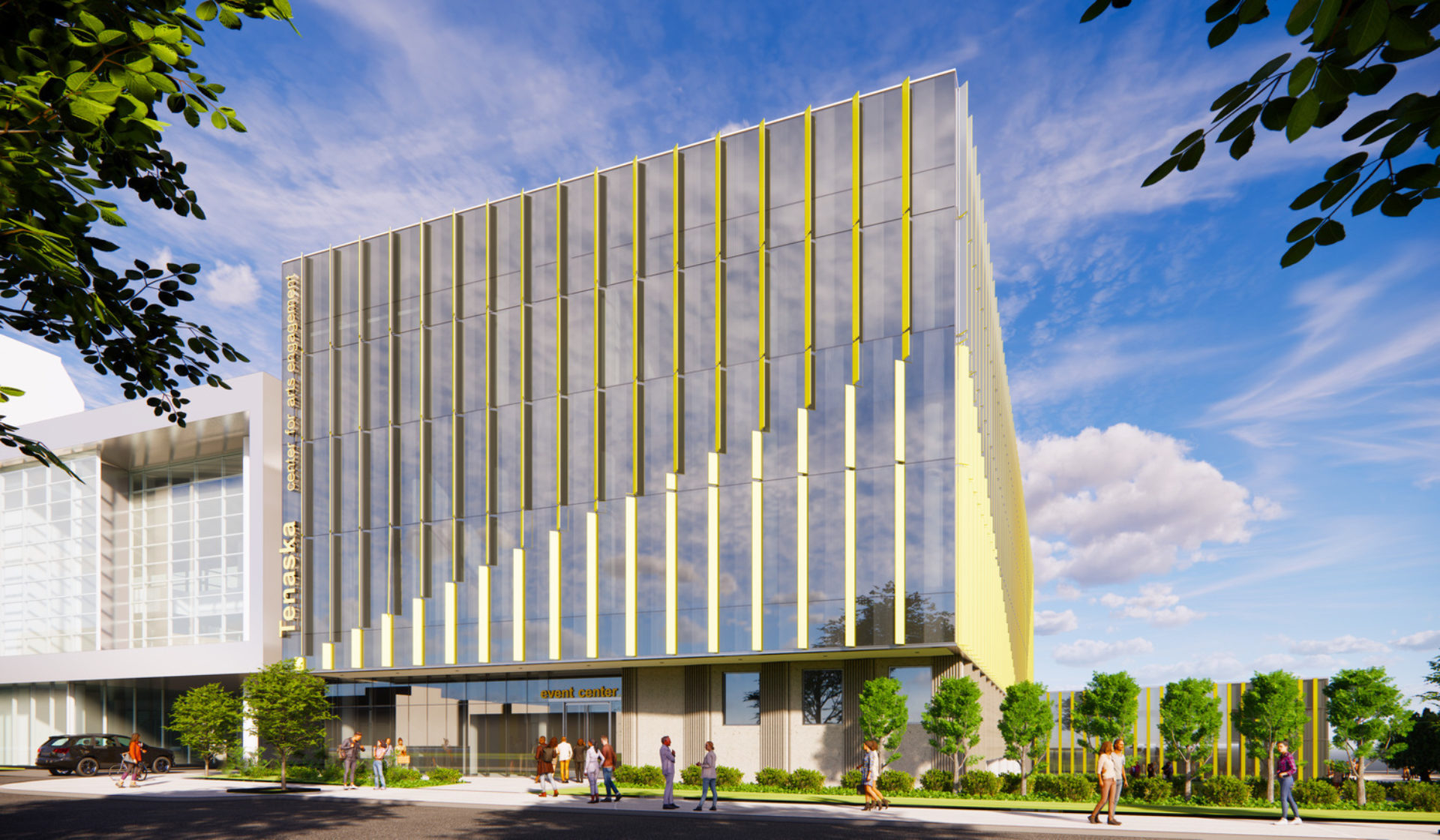
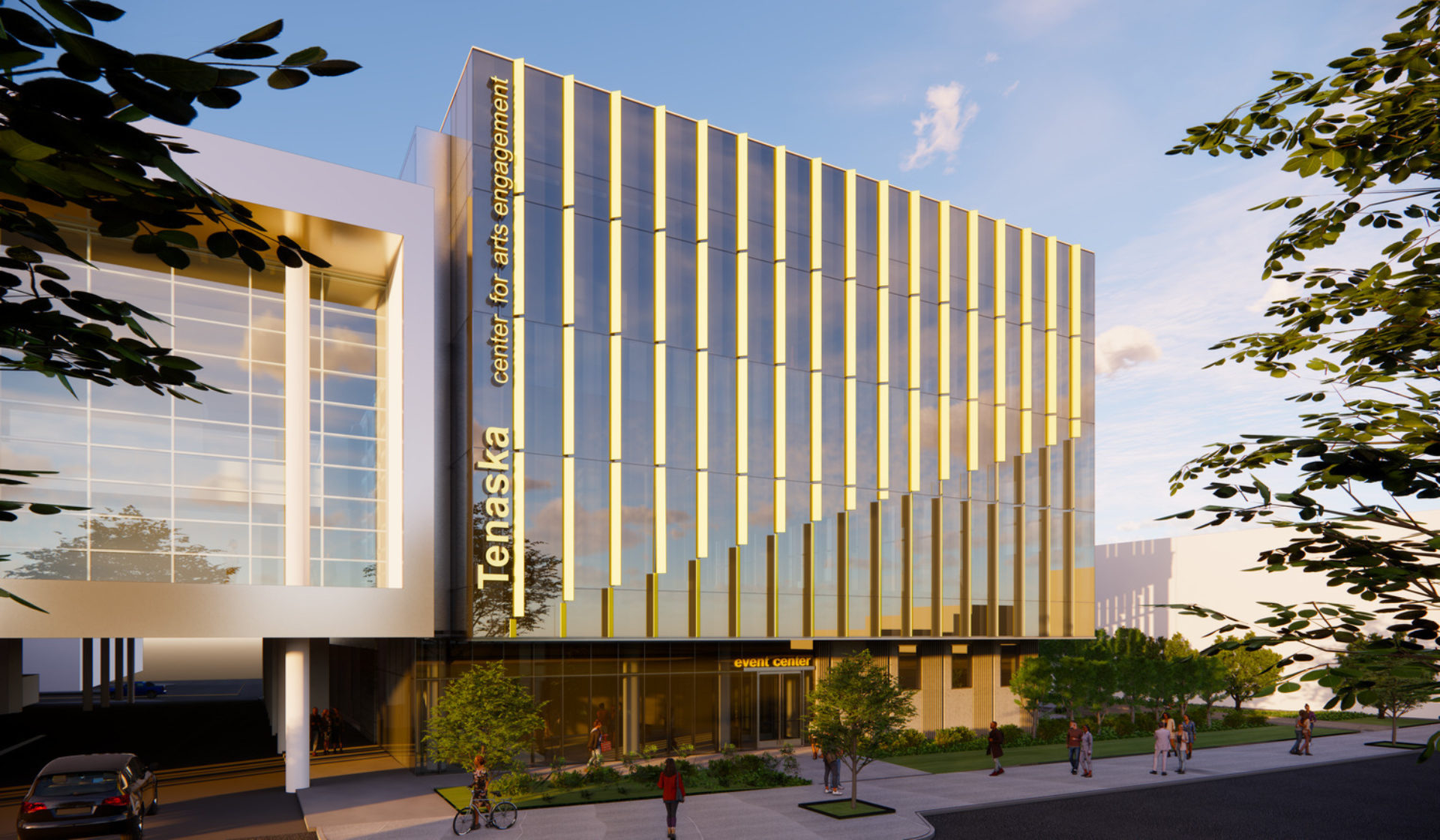
When designing the master plan for Omaha Performing Arts’ (O-pa) campus expansion, the Tenaska Center was envisioned as a facility that would make performing arts accessible to a wider audience, and expand O-pa’s identity as a world-class performing arts institution. Architecturally, Tenaska is elevated from its surroundings, but in harmony with Holland and Steelhouse. To plan a campus where each element is visually distinct but connected, the design team explored how the buildings would relate to each other. The result is a structure that is massed like Holland, and contrasts Steelhouse’s opacity with transparency.
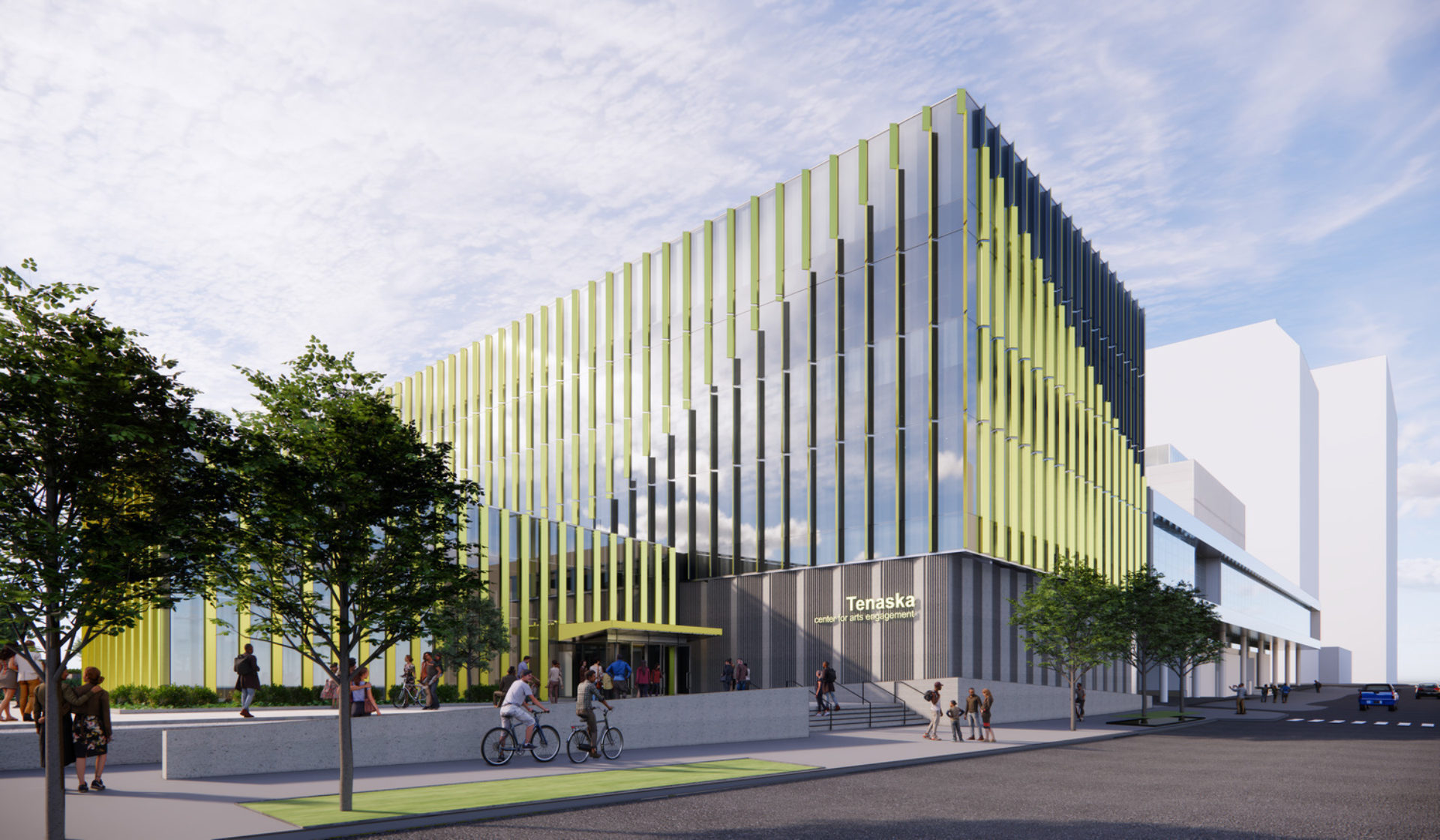
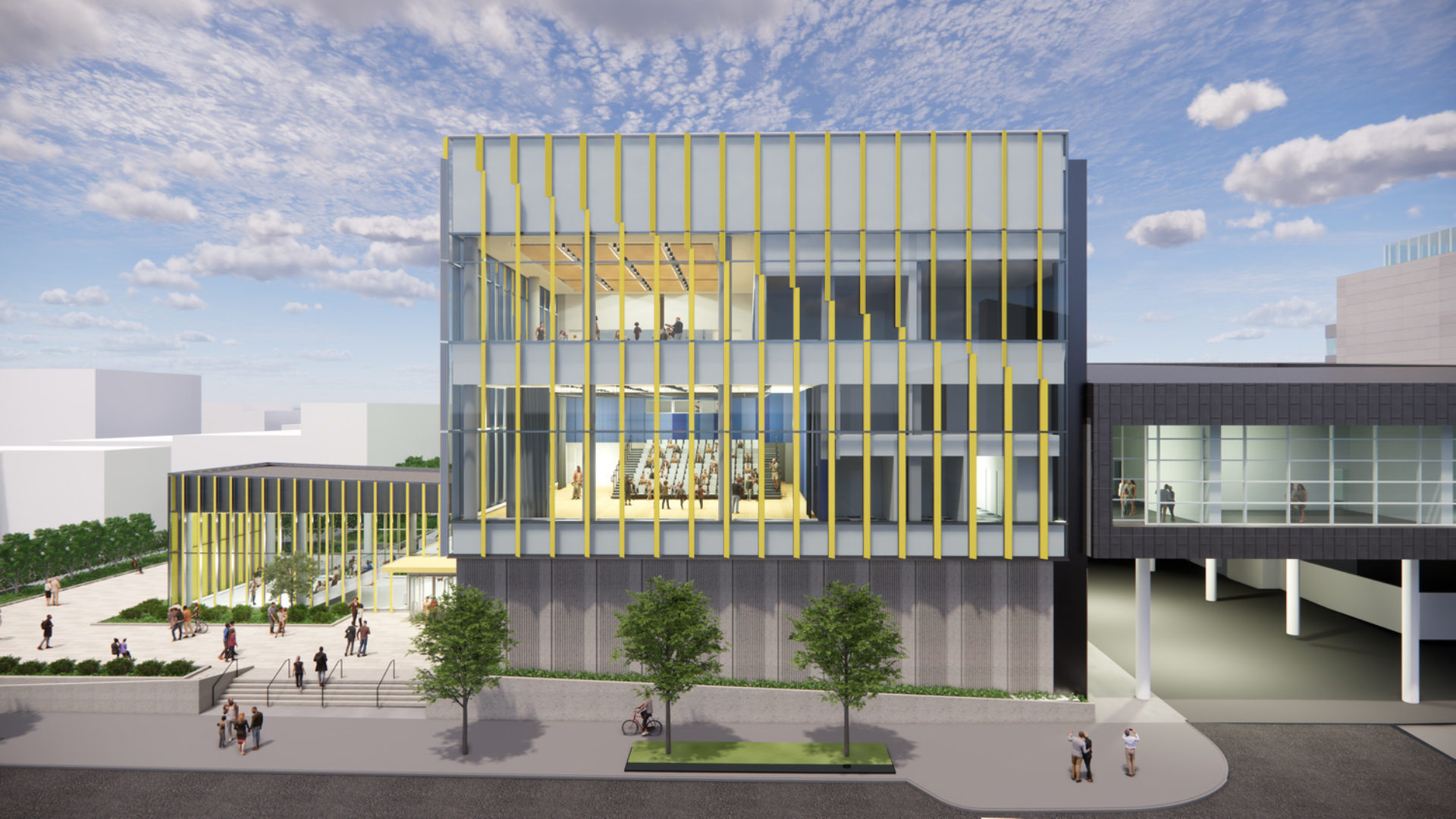
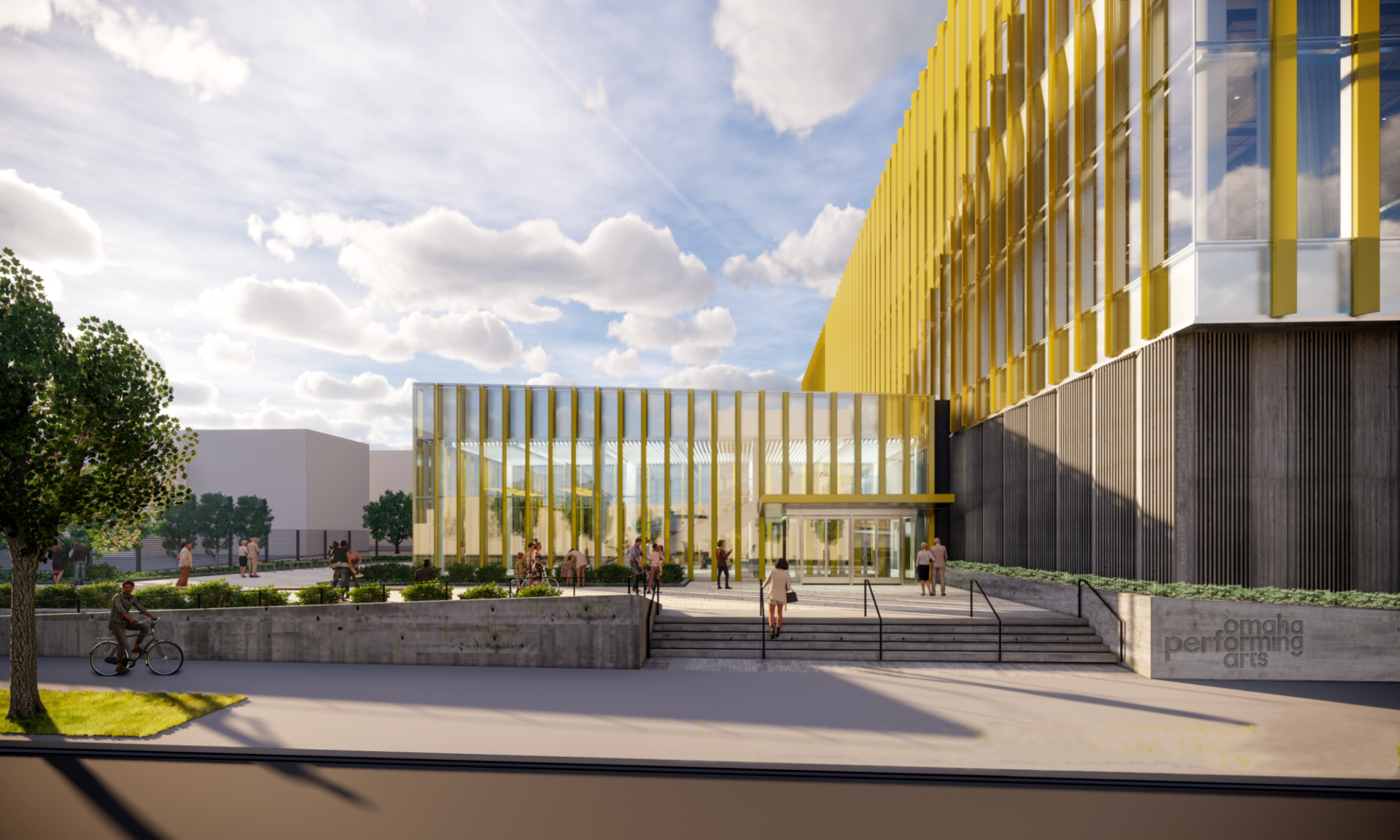
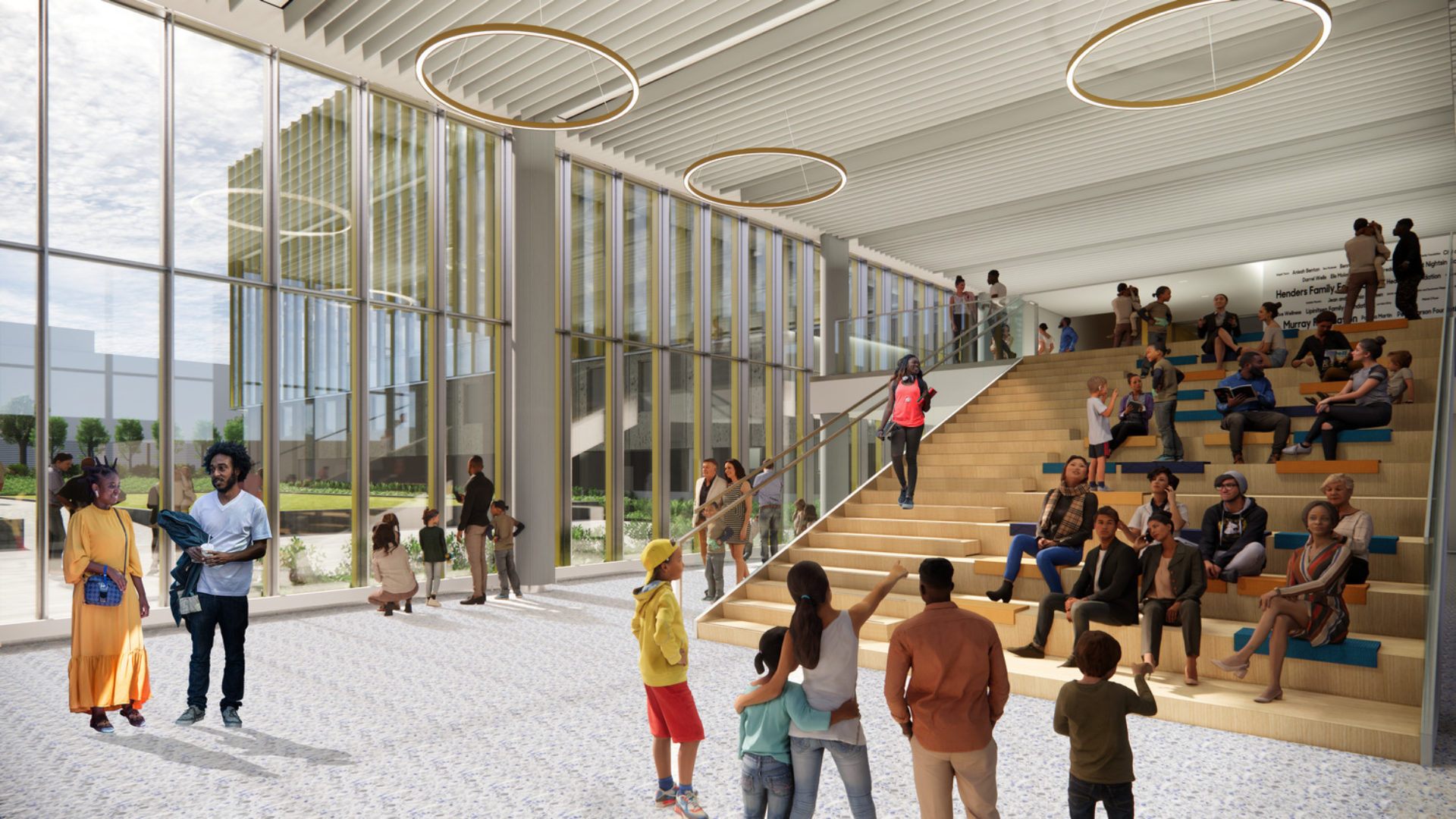
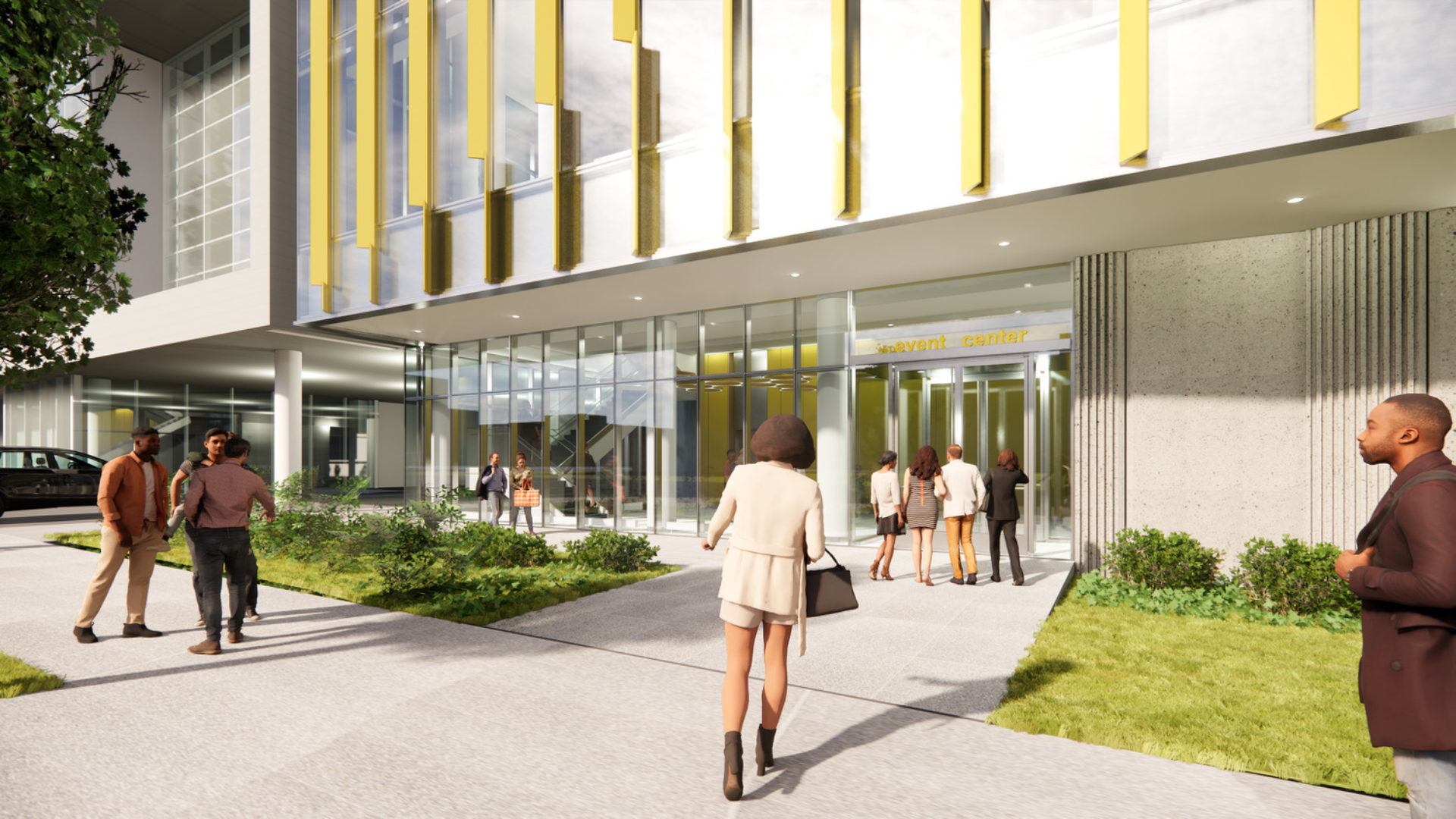
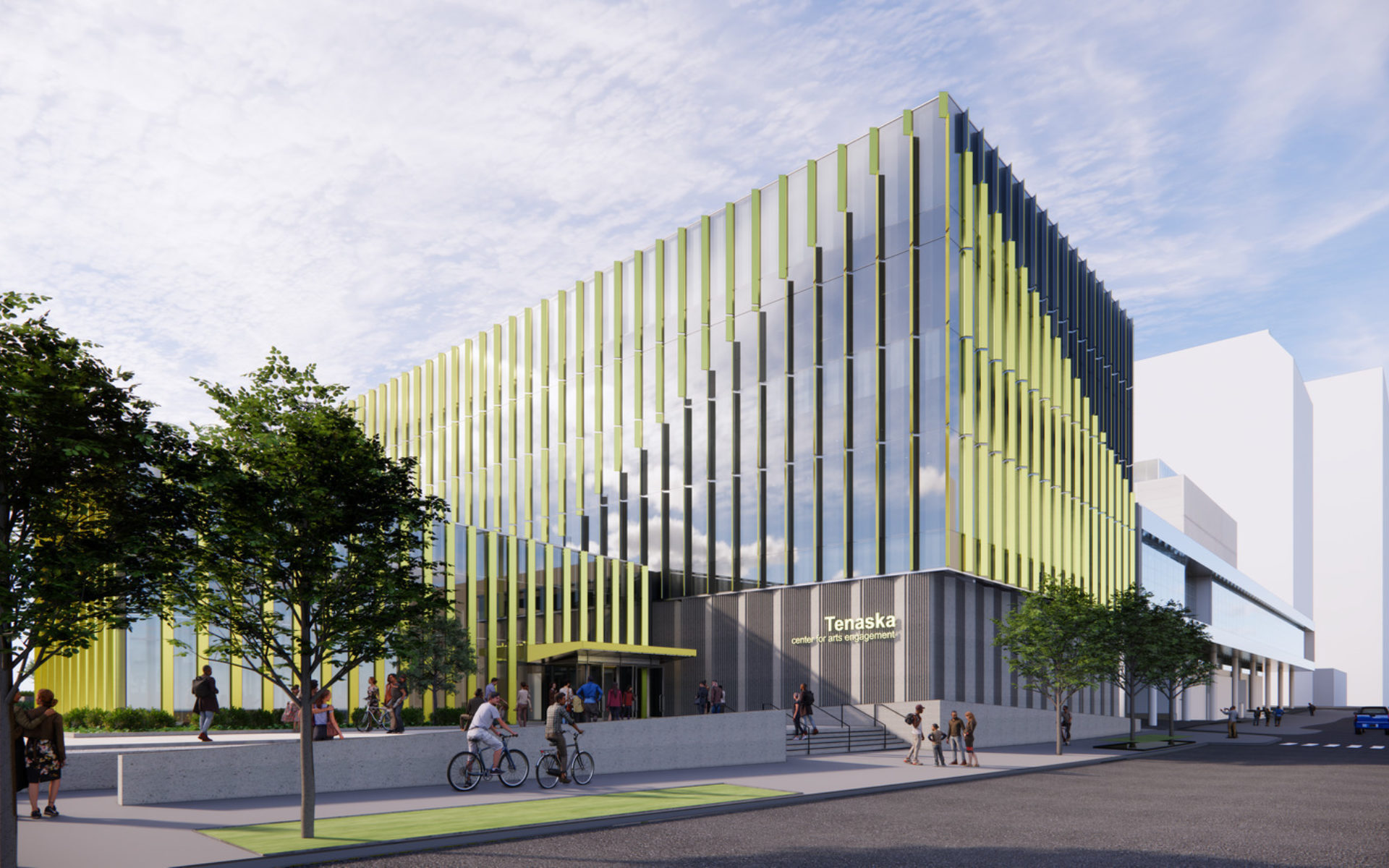
The exterior of the building reads as a horizontal metal-and-glass bar, mounted on a concrete base and set on a gently sloped lawn. Transparency into the lobby and studios allows the Tenaska Center to engage and welcome its community.
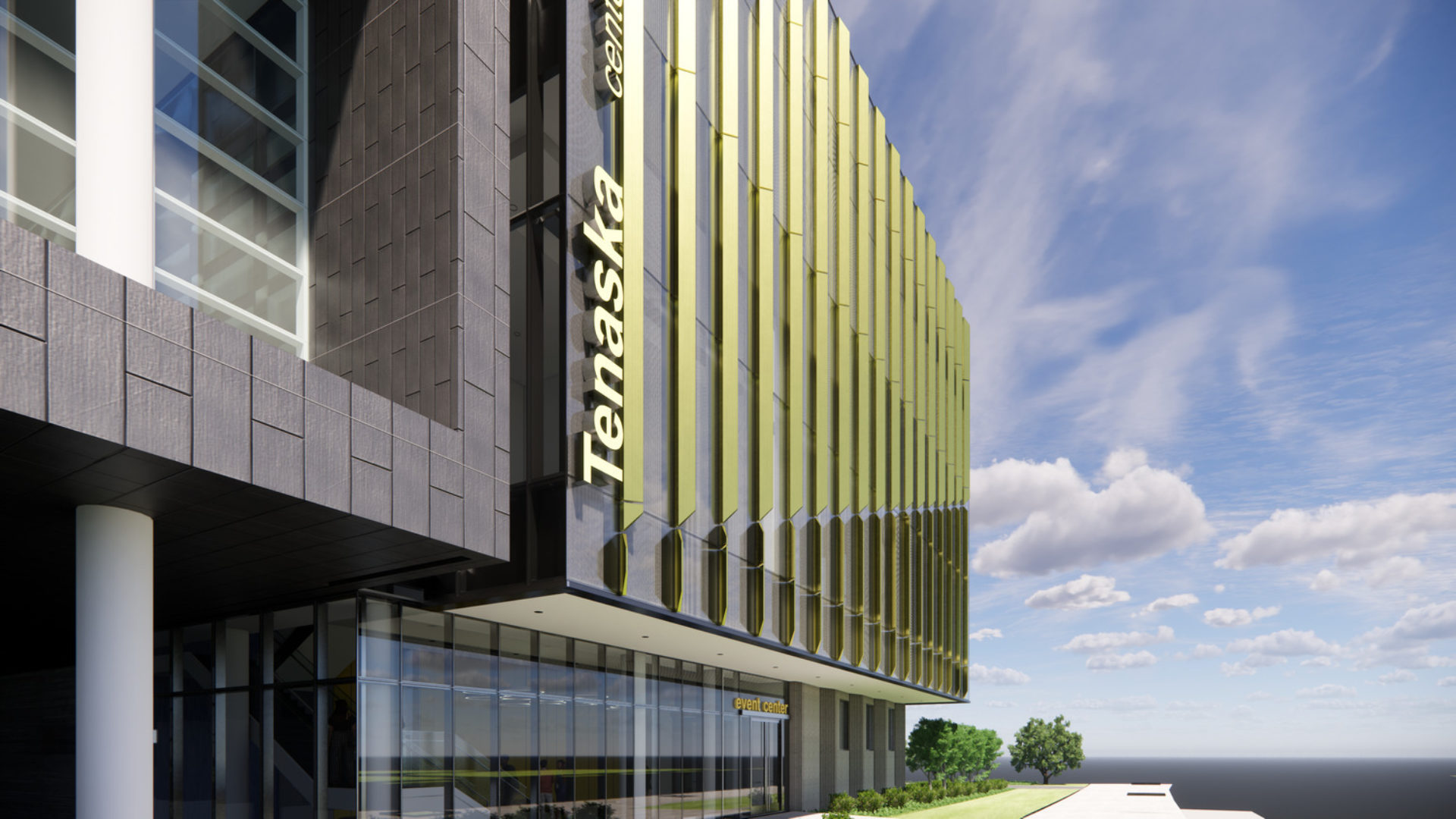
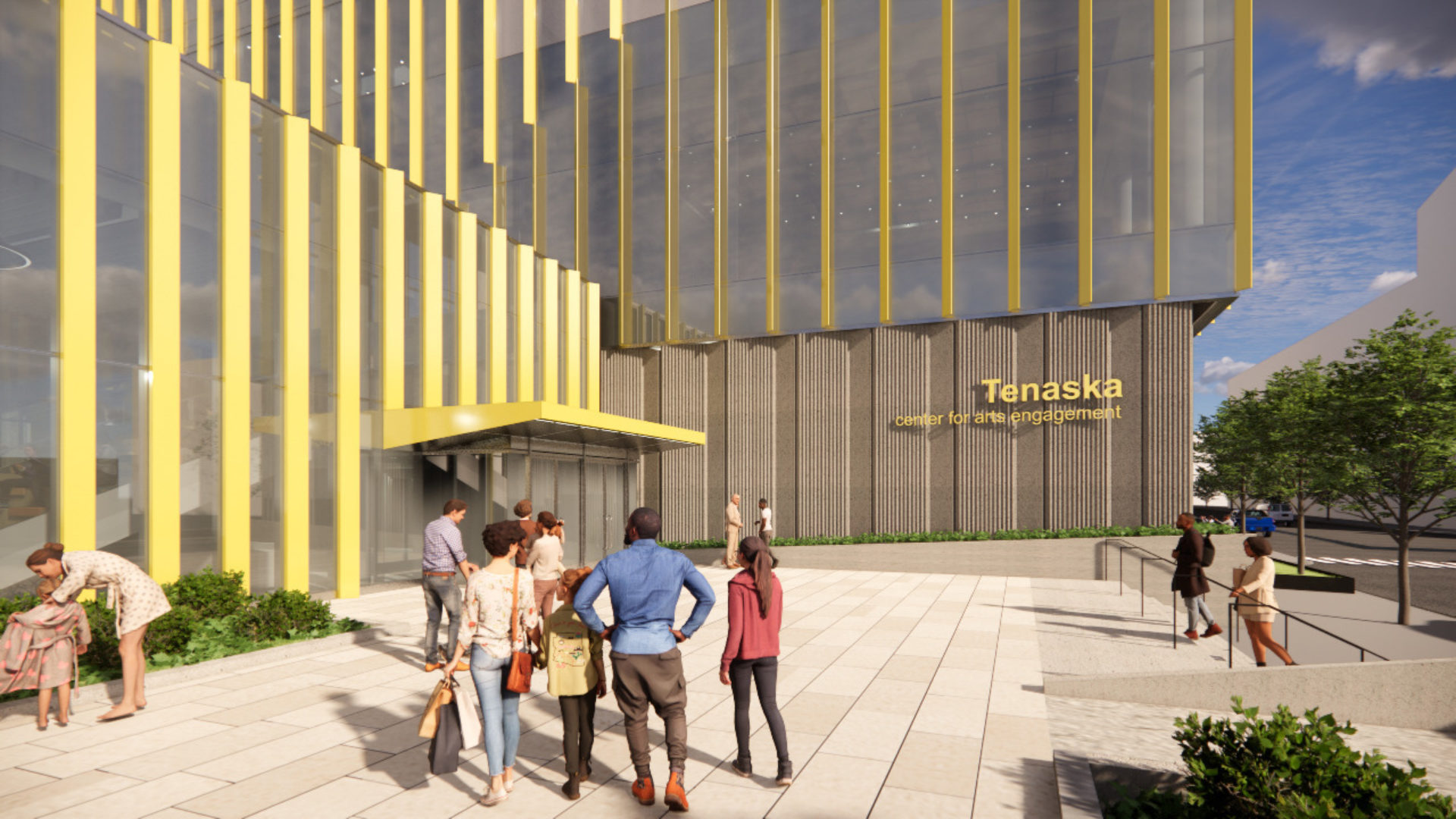
The façade is articulated by an array of vertical aluminum fins that create a large-scale graphic pattern. Secondary patterns of ceramic frit are incorporated in the precast glass panels, sculpted as a rhythmic set of vertical planes that alternate between textures as they zig-zag across the volume.
The lawn is closed off on the north end by a smaller bar-shaped mass, echoing the main structure. This is the Education lobby, the face of the building where the main entrance is located. It establishes a dialogue with Steelhouse Omaha across the street. On the south end of the building, there is a secondary entrance dedicated to the facility’s event space. Even the landscape incorporates spaces for learning and performing, pulling from the courtyards found in the designs of both Holland and Steelhouse.
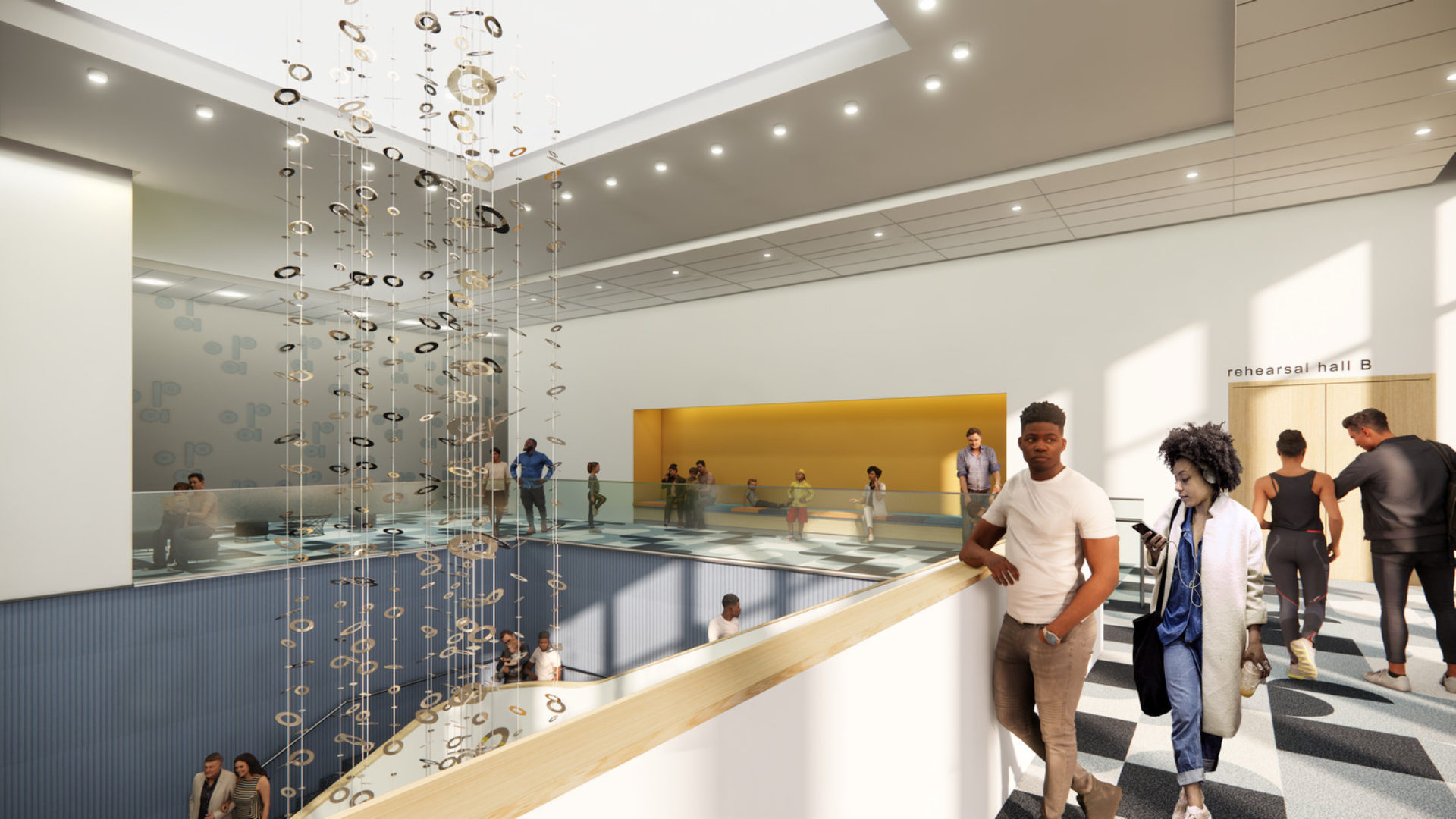
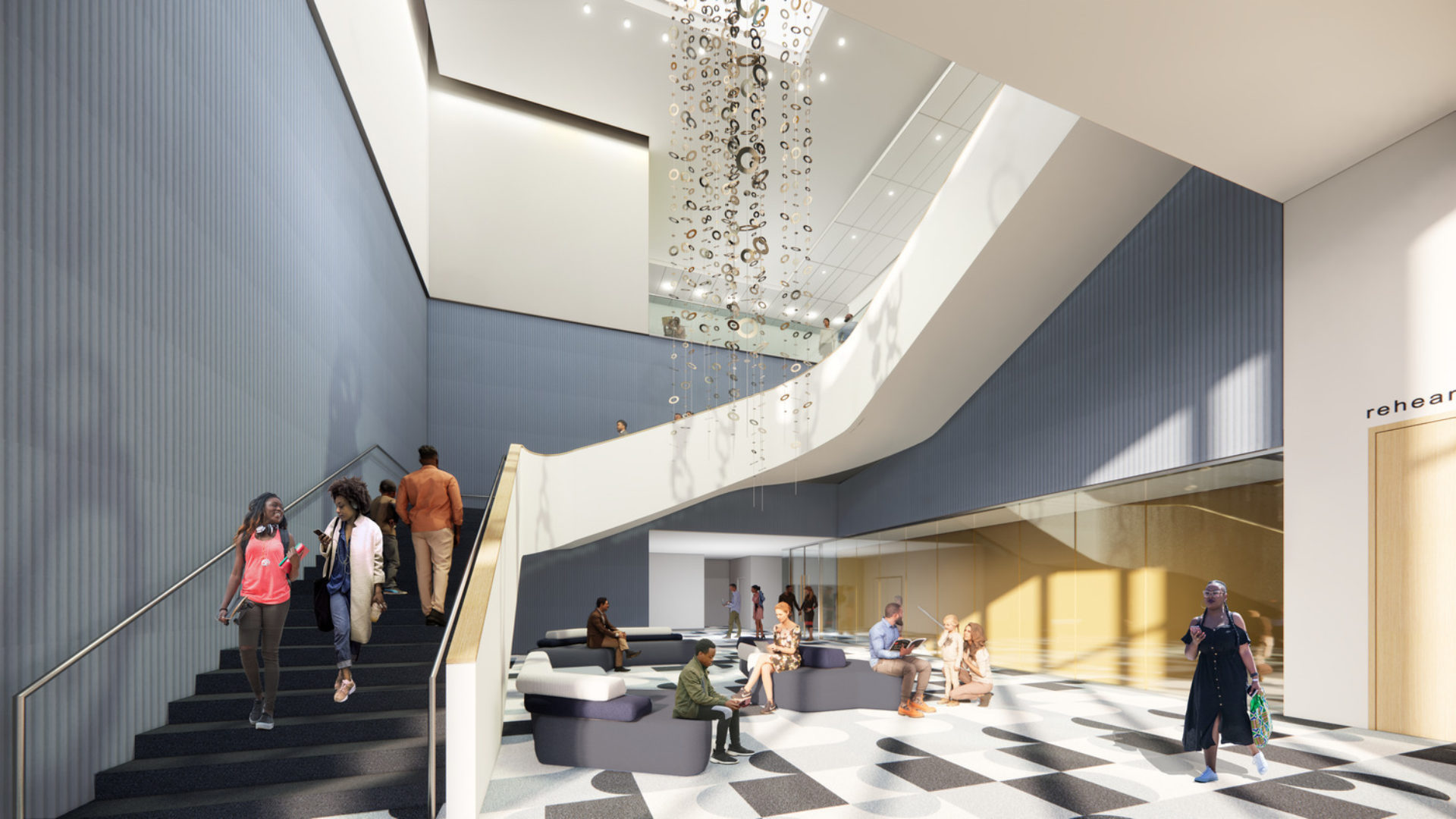
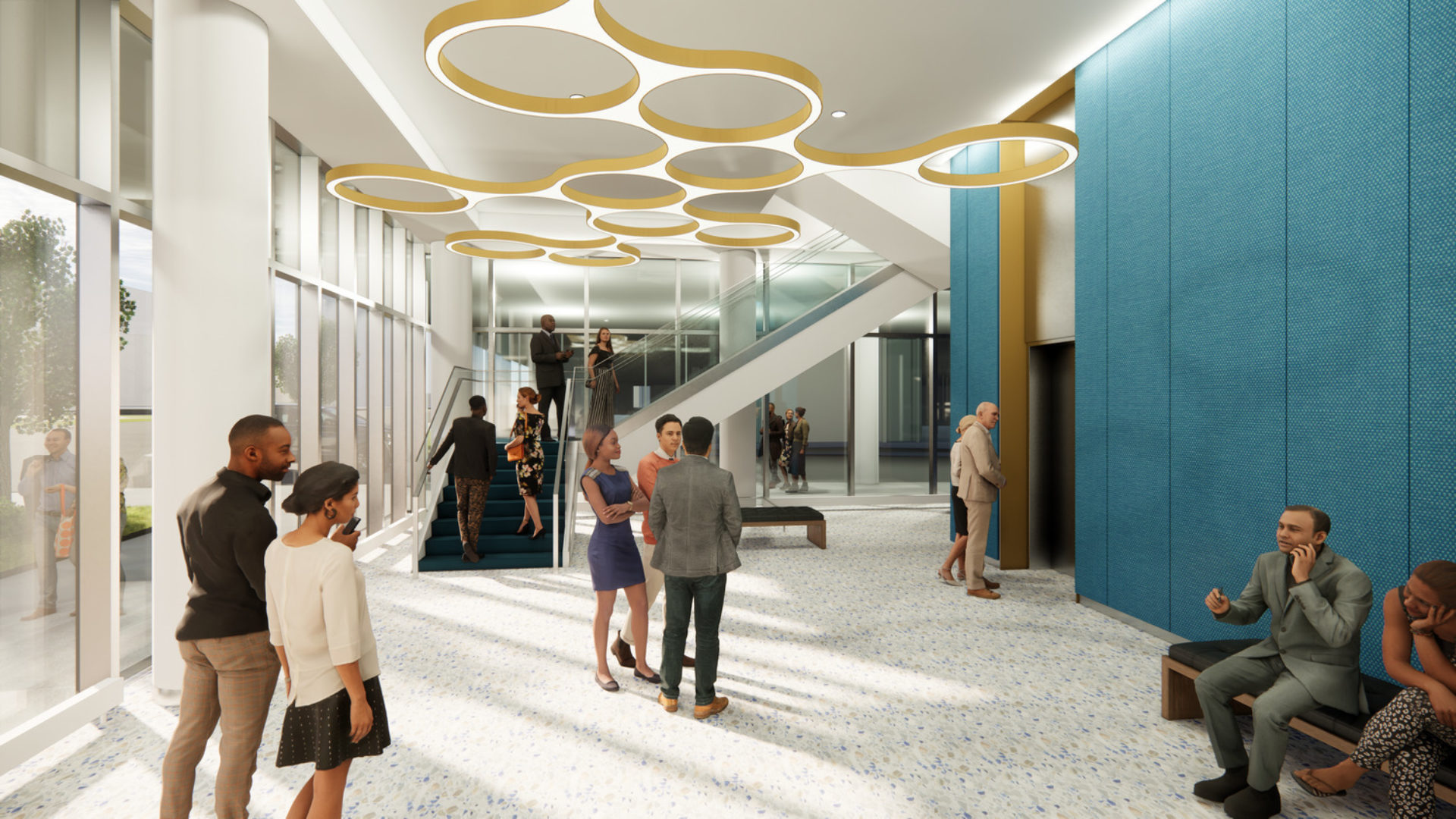
The event and the education spaces are linked by a monumental staircase that acts as the building’s circulation hub and visual centerpiece. The design minimizes acoustic transmission between occupied spaces, enabling the concurrent use of teaching and rehearsal areas.
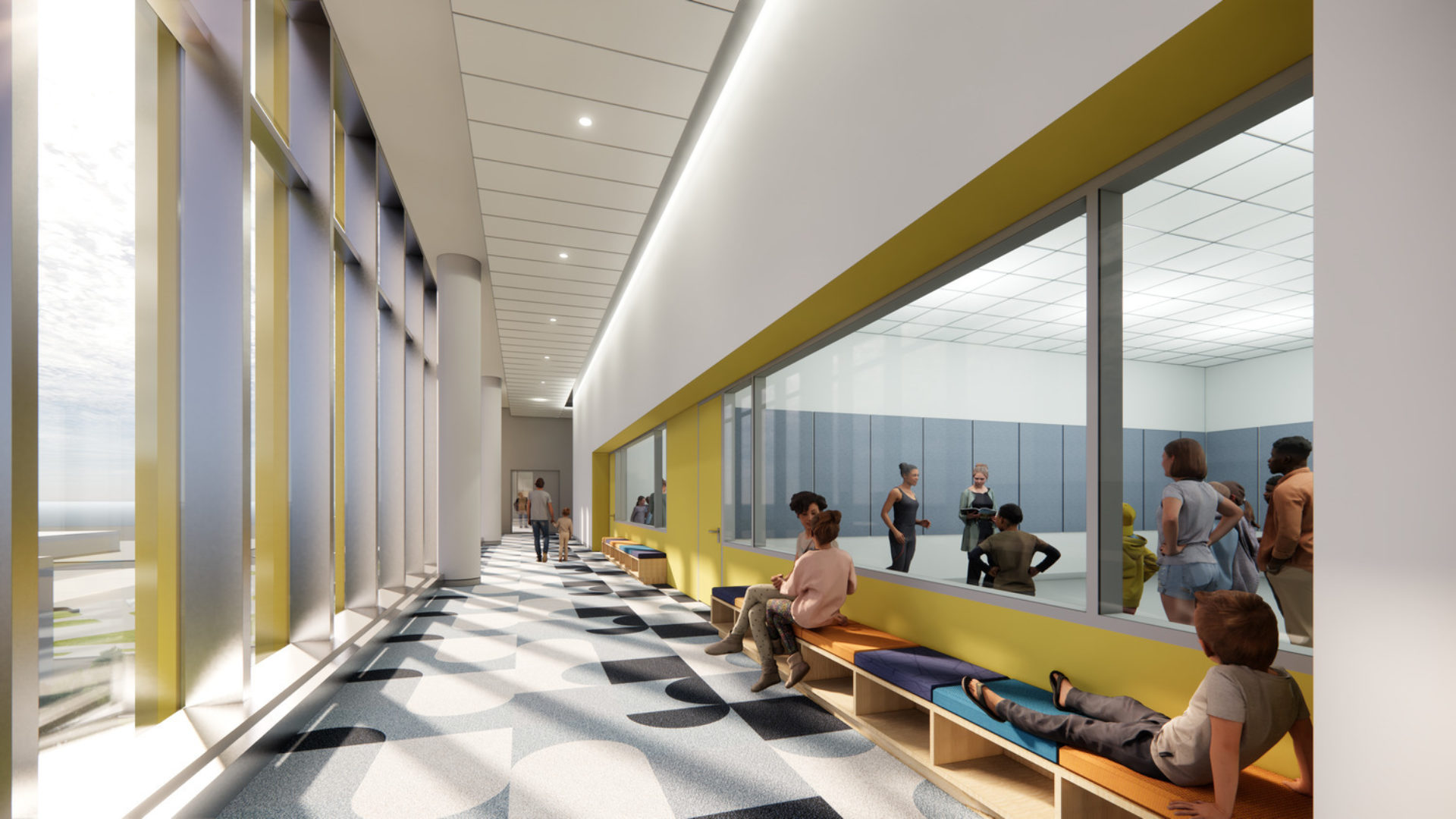
The education spaces incorporate significant acoustic treatments and a colorful palette. A variety of learning spaces are included in the design, from closed rehearsal spaces and classrooms to open areas for informal engagement and impromptu performances.
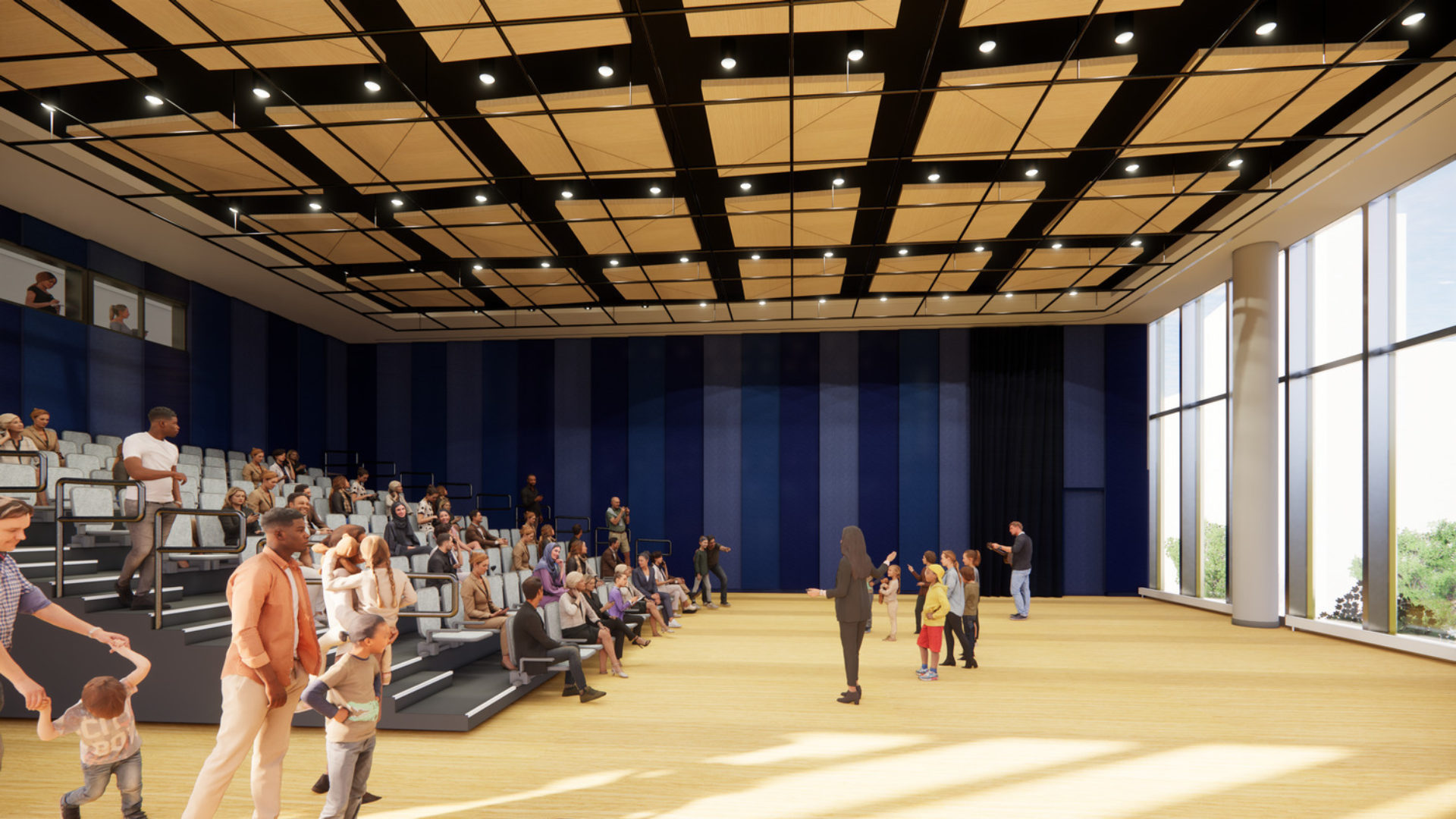
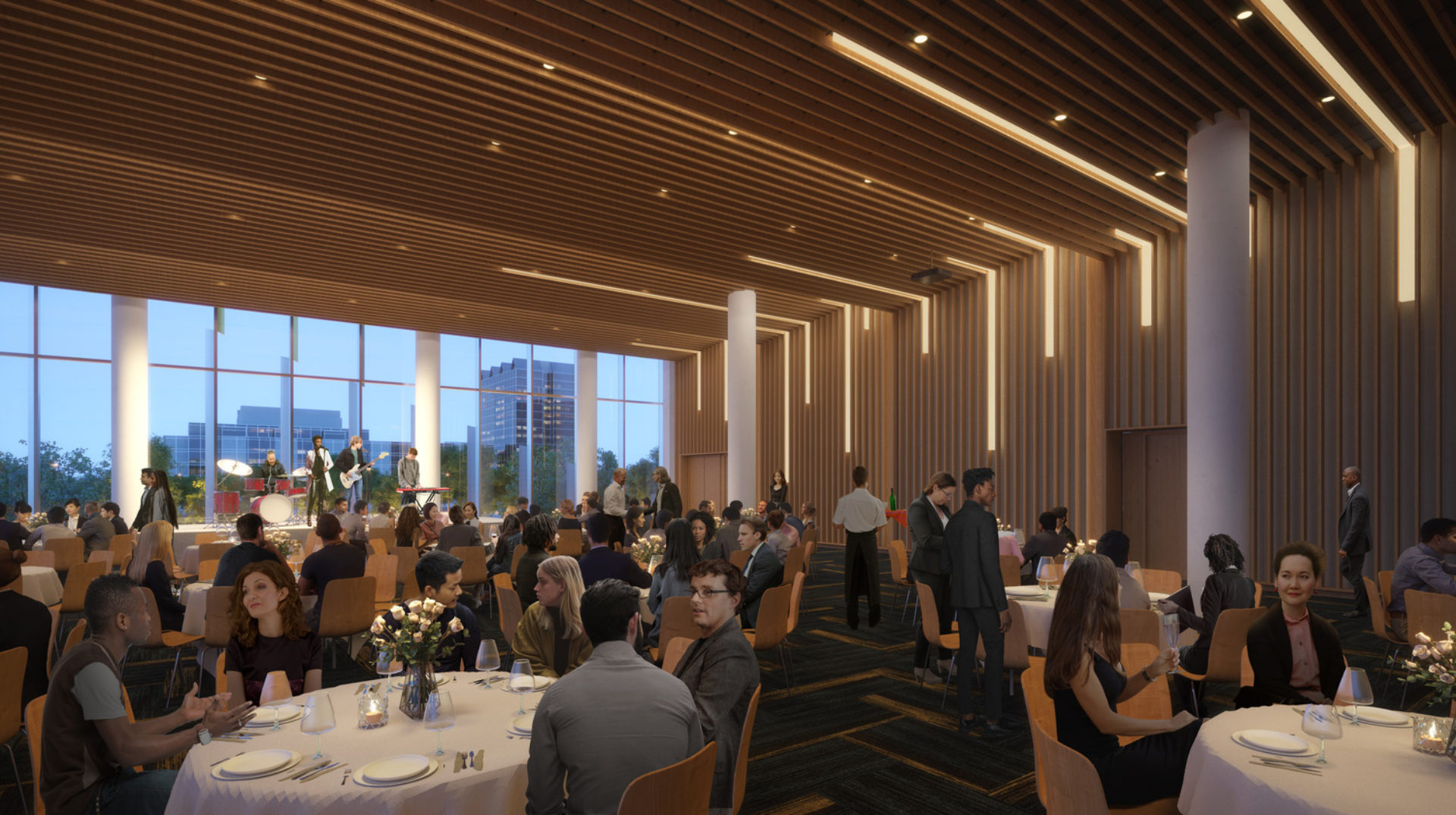
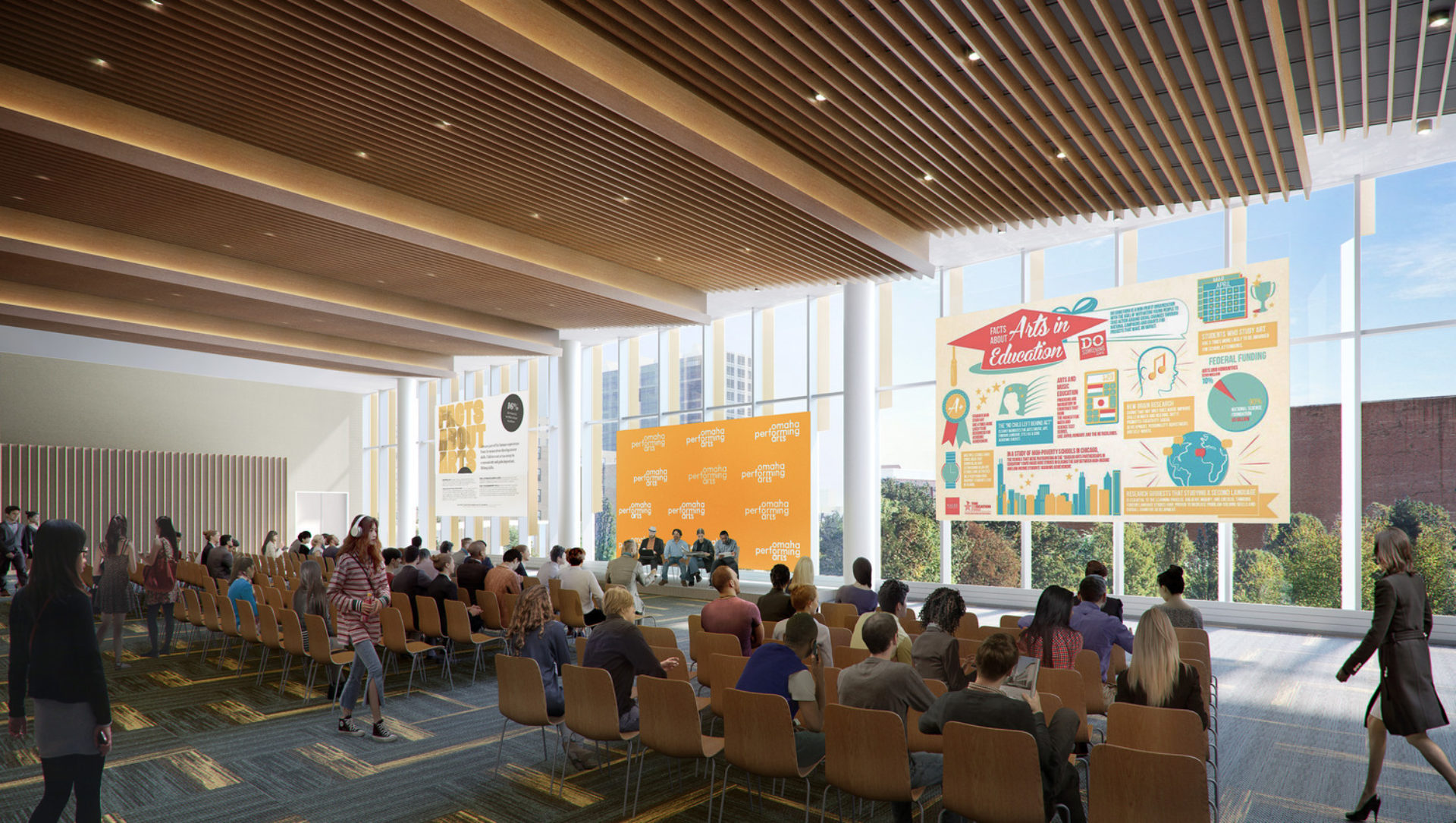
The event spaces incorporate more formal design elements and a palette that references the interiors of the Holland Center. They are imbued with the warmth of biophilic wood ceilings and wall paneling. The event space of Tenaska also physically connects with the Holland Center, via its second floor.